

Long in the tooth - #201
We built an insult out of the wrong animal's mouth.

Every evening, when the sun succumbs to the ridge and the light goes blue and cool, the toddler and I walk the snow-covered dirt to the overlook above the beaver ponds. He is small enough that his stomping feet could be mistaken for any mid-sized animal, moving through crisp, dense snow. We are coming. We are looking.
He has not seen a beaver yet, at least not one he can remember. But he goes anyway, with the full commitment that the ritual matters as much as the result. We reach the overlook—just thirty feet above the water—and we do our pattern scanning. We look for the V-shaped wake, the dark head moving calm across the surface. We study the drag trails in the mud where aspens have been hauled downhill and into the water. We watch the ponds stack up across the valley floor, one after another, until they meet the tree line less than 200 yards away that climbs the north-facing slope. We don’t see a beaver, but we can at least admire their work.
This valley is hemmed in by beavers. They are the architects on either end and along the river—immune from building codes and roof lines—cupping our mining plat town of gridded lot lines with their organic sketches, loose and alive without concern for setbacks or easements. They lived here long before us, and one can assume, they will live here long past us.
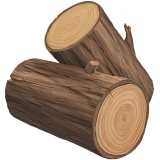
I’ve been explaining beaver life to the child on these walks, which means I’ve been re-explaining it to myself. You say the thing out loud, only to find gaps in what you knew, and suddenly their desire to know is igniting your own.
“Beavers die if they don’t use their teeth,” I tell him. “Their teeth keep growing and growing, and if they don’t chew wood to wear them down, their teeth get out of control.” I make an exaggerated overbite, crossing my eyes and skewing my eyebrows, while I mock chomping on his arm. He laughs.
Beavers really do need to keep using their teeth. Their incisors never stop growing—they erupt continuously from the jaw, iron-reinforced on the front face so that as the softer back wears down, the tooth self-sharpens. I consider this, when I think of what I said to Woods: The chewing isn’t to wear the teeth down. It’s not meant to dull the tool, but sharpen it. But it is true that if the beaver stops chewing—if the environment offers nothing to gnaw—the teeth keep coming, curving inward, until they pierce the skull.
I’ve been sick this week again, wracked by a kind of malaise that threw me off books and back into the scroll. I saw a Reel where a woman about my age was eviscerating men who had left critical comments about her. “Talk about long in the tooth,” one of the comments read. And I found myself back at the beaver ponds. Did the phrase come from rodents?
Turns out, it comes from horses. Their teeth are fully formed at birth, with the whole tooth buried deep in the jaw. As a lifetime of grazing wears them down, the gum recedes to expose more and more of what’s left. Long in the tooth just means there’s a lot of tooth showing because a lot of life has passed.
There’s a creature, majestic and formidable, that has been chewing its whole life, whose mouth bears the evidence of decades of friction, care, effort, and strength, whose age is written in the very instrument of its survival. Long in the tooth.
And leave it to humans, we turned it into an insult.
Which is strange, if you think about it, because the phrase has it backwards. A horse’s teeth aren’t long—they’re exposed. The gum recedes and we see what was always there: a life of grazing, made visible. That’s not excess; that’s just evidence. When teeth are actually long, dangerously, lethally long, it means the animal stopped using them. The beaver that doesn’t chew is the one that grows long in the tooth. Long in the tooth isn’t a sign of too much life, but a sign of too little.
We built an insult out of the wrong animal’s mouth, and then an entire industry to prove the point.
The apotheosis of this is the veneer: a porcelain shell fitted over the tooth to make it look unworn, unmarked, belonging to a mouth that has never tasted candy or coffee, that has never enjoyed a summer of so many oranges your teeth begin to burn.
To get a mouthful of veneers, a dentist has to grind down the teeth—irreversibly, permanently—to make room for the cosmetic, leaving the original teeth, the ones grown through childhood, as mangled barbs. Before the veneers are placed, the person looks like a moray eel, something and someone slinking around the crevices of the dark.
The original teeth are destroyed in order to display the appearance of being undamaged.
Some veneers save a life, a smile, a feeling. Some do not. If you’ve been watching smiles change across decades of TV, you can see most veneers are applied in an effort to save careers. It’s considered brave to not have them, to look as if you have lived.
I didn’t get dental insurance this year. We’d reached a moment of precarity between clients and increasing health insurance premiums that made me feel like I couldn’t stomach another $100 a month. We never go to the dentist, I said. With all the wood around me, I didn’t knock on any of it, and I found myself head tipped back under a ceiling-mounted TV showing scenes of grazing animals while I unlocked my jaw.
“Without X-rays, we can’t really tell you anything.” I gargled my understanding. “Can you tell me off the top of your head which teeth have root canals?”
I have not had great luck with teeth. It is hard to remember which teeth are still real. I had my first tooth capped at age 7 after breaking it in half when my face made critical impact with a concrete slab. At age 9, I chipped the cap after getting bucked off a horse into a fence. It was the day before Picture Day, and I found myself in the garage that night with an industrial file, shaving down what was left of the cap to make it even again.
I had braces twice for a cumulative eight years; my first orthodontist skipped town. I’ve had five teeth removed. I’ve knocked teeth out and in, over and over, riding bikes and animals and life. Putting on my clear retainer guards the other night, I noticed one of my front teeth no longer fills the retainer. I had chipped off the bottom sliver without even realizing it. It is not beyond me that I would be objectively better looking with objectively better teeth.
But subjectively, I like the one extremely discolored tooth. I like all the chipping. I look in the mirror, and I see someone a bit ragtag. I see a girl just up from her bike, blood dripping down her chin, dirt-burn blushing her cheeks. I see a girl shoved to the ground, thrown into the fence, flying into the curb, and I see the wild glint of an animal unafraid to use her teeth.
There is a process in these aspen forests called suckering. When the beavers chew the aspens, the trees respond by pushing up more shoots, more growth, more material to chew—groves kept so young and green by constant cycling that they almost never burn. The beaver’s appetite makes the aspen more generative. The aspen’s abundance makes the beaver’s work possible. What looks like harm is a relationship of mutual insistence.
A beaver walks into a dental clinic. Their teeth are deep orange, their enamel rich in iron. It is the same color as the streams that run from the iron deposits deep in the mountain. Their teeth hang from their mouth, prominent and pronounced, like a trap ready to snap.
“I’d like to get veneers,” the beaver says, the s slipping between his two front teeth. The woman looks over the counter. She smiles, her teeth a perfect row of undisturbed whiteness reflecting off the white walls. Her ecosystem is one of fluorescent light and mopped floors. The furniture is plastic. “Of course,” she says.
The beaver leaves the office, teeth shining like a cartoon. The porcelain looks perfect, unworn, the teeth of an animal that has never had to work. But in the forest, he cannot use them. The first time he sinks them into an aspen to eat, they snap. He cannot chew the tree down, so the dam doesn’t get built. The pond doesn’t form. The aspen grove that would have suckered in response to being eaten stands there, ungrazed, growing old and more and more scared of fire. The valley that would have flourished turns to fear.
All because someone convinced the beaver that looking unchewed was worth more than chewing.
My teeth don’t keep growing, despite how many times I’ve found myself forced to check. But something does. Something is always growing that we are better for using, the part of us that needs something to push against in order to stay shaped correctly. Left without resistance, it doesn’t stay still. It keeps coming.
I think we can feel it pressing against the surface. I think in all the pleas for inconvenience and friction, we can feel something has grown unchecked. The softening of our environment is real. Our information arrives pre-chewed, shortform and so very digestible. Algorithms anticipate the next want before the current one is finished. There are fewer things that push back. There is a persistent and costly pull toward the smooth and easy to swallow, and we are beginning to worry about the curve of our teeth.
In the season of longer light, Woods and I will keep going to the beaver ponds. He will keep stomping impressions of his age into the snow. We will keep scanning. At some point, he will see the beavers doing their work. The V-wake, the flat tail, the animal going about the work that keeps it and the valley alive. We could watch a video of a beaver, and maybe we will, but we’ll still keep coming.
All spring and summer, our evenings will end at the ponds because I want him to understand what he’s looking at when he finally sees them. Not a cute animal, or even an industrious one, but a creature for whom living and effort are the same thing, whose whole mouth is a record of a life that kept chewing.
We need something to chew on to stay alive: The hard conversation, the entirety of a book, the project that wouldn’t cooperate, the grief that still springs a leak no matter how many times we seal it—these are not character-building exercises. They are maintenance. They are what keeps the instrument from growing back into itself.
Long in the tooth is an insult. We were just using it wrong.
Shangrilogs isn’t about friction-maxxing, but it is about living. For all those who like to look out over the ponds, here’s a place to slow down.
If this piece spoke to you, please share it.
Every time you share a writer’s work, she gets closer to adopting another cat.
Rachel Hochhauser joined us on Pen Pals this past week, and now she’s a Reese's Book Club. Her Cinderella story just keeps getting better. Take a listen!
You always end up in a place that I didn’t know you were taking me when your essay starts. Your words cause my thoughts to pool usefully, rather like the effects of the beaver’s dam on a mountain stream. Very nicely done!
Your smile is beautiful (as is this essay) and authentic. A handsome guy I know (seriously, he used to be a Gucci and Calvin Klein underwear model) had small teeth that bent inward and looked interesting. I saw on Instagram he obviously got veneers, and now the glaring row of white Chicklet pieces on his smile looks like a caricature. I can’t stand veneers and all other signs of phoniness, whether it’s disc-like breast implants defying gravity and popping off the chest or a protruding brow line of smooth skin from years of routine Botox. I’m cautiously optimistic that the hideous homogeneity of MAGA face is sparking a backlash, and that looking real and interesting, reflecting a life well lived, will be admired again.